Trading: A Simple 9:30 AM Strategy Built on Three Steps
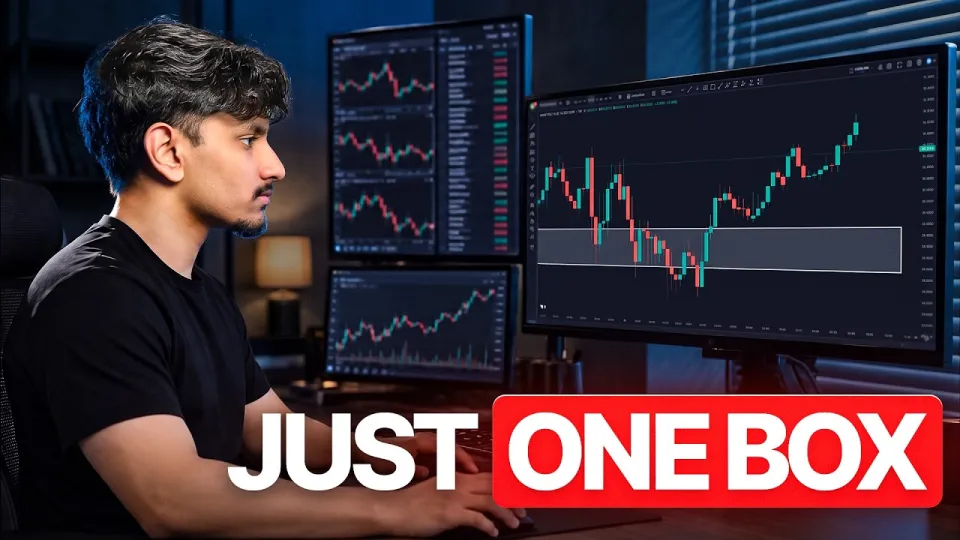
Need articles like this for your video? They help promote it on YouTube and Google — order them in the Telegram bot @sat_sit_bot. The bot writes and publishes the articles itself (with your YouTube video embedded) on popular topical websites (no ads). Try it free: 50 articles on us.
· based on the channel Scarface Trades
Trading becomes simpler when you stop stacking indicators and instead follow one repeatable routine around the 9:30 AM open: mark the key levels, wait for price to react, and enter only on a defined trigger. Scarface Trades lays out exactly that in a three-step framework — setup, strategy, entry — and offers a free Simple Trader Playbook course that walks beginners through the same process.
The core idea is not a secret indicator or a magic signal. It is a fixed order of operations that removes improvisation from the session and makes every trade comparable to the last one. That comparability is what allows a trader to measure a win rate at all.
Why most traders struggle before they even place a trade
Most traders fail because they trade a different idea every day, so nothing they do can be measured or improved. The video opens on this point directly: trading feels hard until a single strategy is learned well enough to be repeated.
Common symptoms of that problem:
- A chart covered in five or six indicators that contradict each other, so the decision defaults to whichever one agrees with the trader's mood.
- No fixed time window, meaning the trader is scanning all day and taking low-quality setups out of boredom.
- Entries taken mid-candle or on impulse, which makes the risk on each trade impossible to define in advance.
- No record of results, so a losing week feels like bad luck rather than data.
The 9:30 AM anchor solves a large part of this. The US equity open concentrates volume, spreads tighten on liquid names, and the first meaningful range of the day forms within minutes. A trader who only operates in that window has a finite, repeatable sample to study instead of an endless stream of noise.
Step 1: setting up the trade before the bell
Setup work happens before the entry, and its job is to define where a trade is even allowed to happen. In practice this means marking the levels that matter on the higher timeframe first, then dropping to the intraday chart only after the map exists.
The levels worth marking for a 9:30 AM session:
- The previous day's high and previous day's low — the two references most intraday liquidity clusters around.
- The previous day's close, which often acts as a pivot for the opening drive.
- The overnight or premarket range, so you know whether the open is inside balance or breaking out of it.
- Any obvious swing high or swing low from the prior session that price has not yet revisited.
Once those lines exist, the question stops being "what should I trade?" and becomes "is price at a level I already care about?" That single change kills most impulsive entries. A trader who only acts at marked levels takes far fewer trades, and the ones taken have a reason attached.
Step 2: the strategy itself — reaction at a level, not prediction
The strategy is to let price arrive at a marked level and then show its hand, rather than guessing direction before it gets there. This is price action trading in its plainest form: level, reaction, confirmation.
The sequence looks like this:
- Price approaches a marked level such as the previous day's high or low.
- You watch how it behaves on arrival — does it reject sharply, stall, or slice straight through?
- A rejection with momentum back away from the level sets up a trade in the opposite direction of the approach; a clean break with follow-through sets up a continuation.
- You define invalidation immediately: if price closes back through the level, the idea is wrong and there is no trade.
The video's framing is that this is simple, not easy. The difficulty is not in identifying a level — anyone can draw a line on yesterday's high. The difficulty is waiting for the reaction and accepting that most approaches will produce nothing worth trading. A trend line and a level will frequently outperform a screen full of oscillators, precisely because they cannot argue with each other.
Step 3: the entry model and where risk actually lives
The entry model is the part that turns an idea into a trade with a fixed cost. Rather than entering on the touch of a level, the entry waits for a confirmation candle to close and then uses a retest or a break of that candle's extreme as the trigger.
Practical rules that make the model usable:
- Enter after the confirmation candle closes, not in the middle of it — a candle that has not closed has not confirmed anything.
- Place the stop on the other side of the level or the confirmation candle, whichever gives a tighter, more logical invalidation.
- Size the position from the stop distance, so a wider stop means a smaller position, not a bigger loss.
- Skip the trade entirely if the stop would be so wide that the position size becomes trivial — that is the market telling you the setup is not clean.
This addresses the most common practical complaint about small-timeframe strategies: that the move is too small to be worth the position. The answer is that the target is measured in multiples of the stop, not in dollars per share. A tight stop on a liquid instrument can produce a favourable risk-to-reward ratio even when the absolute move is modest, and a wide stop on a choppy chart will lose money regardless of how large the move looks.
Reading the open when the chart is choppy
The 9:30 AM window is not automatically tradable, and the honest version of this strategy includes a filter for the days it should be skipped. Chop is the normal condition, not the exception.
Signs that the open is not offering a setup:
- Price sits in the middle of the previous day's range with no level nearby — there is no reference point, so there is no trade.
- Repeated wicks through the same level with no follow-through in either direction.
- The opening range keeps contracting, with each candle smaller than the last.
- Your level gets tested three or four times in quick succession; each retest weakens it.
On those days the correct action is no action. A strategy that only fires two or three times a week is still a strategy; one that fires fifteen times a day is usually a hobby. The video's own framing — that trading becomes simple once the strategy is mastered — depends on this discipline, because simplicity only pays if it is applied consistently.
Common questions traders raise about this approach
Time zone and session. The 9:30 AM reference is New York time, the US equity open. Traders in other regions need to convert it, and anyone trading forex should note that the equivalent liquidity windows are the London and New York sessions rather than the equity bell.
Which instrument. The framework is instrument-agnostic, but it needs volume. Liquid large-cap stocks, index futures and major forex pairs respect prior-day levels far more reliably than thin small caps. Concentrating on one or two instruments you know well beats rotating through a watchlist of ten.
One-minute charts. Trading the 1-minute is optional, not required. The setup and level work happens on higher timeframes; the lower timeframe only refines the entry. A trader uncomfortable on the 1-minute can execute the same model on the 5-minute with slightly wider stops.
Hindsight bias. Setups always look cleaner after the fact. The only defence is backtesting and forward-testing on a demo account, recording each trade with its level, entry, stop and result until the sample is large enough to mean something. Without that record, a good week and a lucky week are indistinguishable.
Useful links
- Free Simple Trader Playbook course
- The Accelerator — private community and live trading
- Scarface Trades on Instagram
- Scarface Trades on X
Bottom line
A simple trading strategy is one you can describe in three sentences and execute the same way every session: mark the levels, wait for the reaction at the 9:30 AM open, enter on confirmation with a defined stop. The framework in this breakdown comes from the Scarface Trades channel, which builds its teaching around price action and a deliberately small toolkit rather than indicator stacking. The hard part is not learning the steps — it is skipping the days when the chart offers nothing and recording every trade so the results mean something. Beginners who want the process laid out end to end can start with the free Simple Trader Playbook before risking capital.
Key takeaways
- The strategy is built around the 9:30 AM market open, when volume and volatility peak in US stocks and futures.
- It has three fixed stages: setting up the trade, the strategy itself, and a repeatable entry model.
- The approach relies on price action and a few drawn levels rather than stacked indicators.
- Waiting for a retest instead of chasing a breakout is the patience component most traders skip.
- Backtesting the setup before risking money is treated as a prerequisite, not an optional step.
Questions & answers
Do I have to trade the 1-minute chart for this strategy to work?
No. The level marking and setup work happen on higher timeframes, and the lower timeframe is only used to refine the entry. A trader who is uncomfortable on the 1-minute can run the same confirmation-and-retest model on the 5-minute chart, accepting a slightly wider stop and a smaller position size.
Where exactly do you enter — on the touch of the level or after the candle closes?
After the confirmation candle closes, not during it. An unclosed candle has not confirmed anything, and entering mid-candle makes the stop distance arbitrary. The trigger is either a retest of that closed candle or a break of its extreme, with the stop placed on the other side of the level or the candle.
Is the position size too small to be worth it on tight stops?
The target is measured in multiples of risk, not in dollars per share. A tight stop on a liquid instrument can still give a favourable risk-to-reward ratio even when the absolute price move is modest, while a wide stop on a choppy chart loses money no matter how large the move appears.
What should I do when price sits in the middle of the previous day's range?
Skip it. With no nearby level there is no reference point, so there is no defined invalidation and no trade. The strategy depends on price arriving at a marked level and reacting; trading the middle of the range removes the only objective part of the decision.
Source: Once You Master This Strategy, Trading Becomes Incredibly Simple · Markdown version